




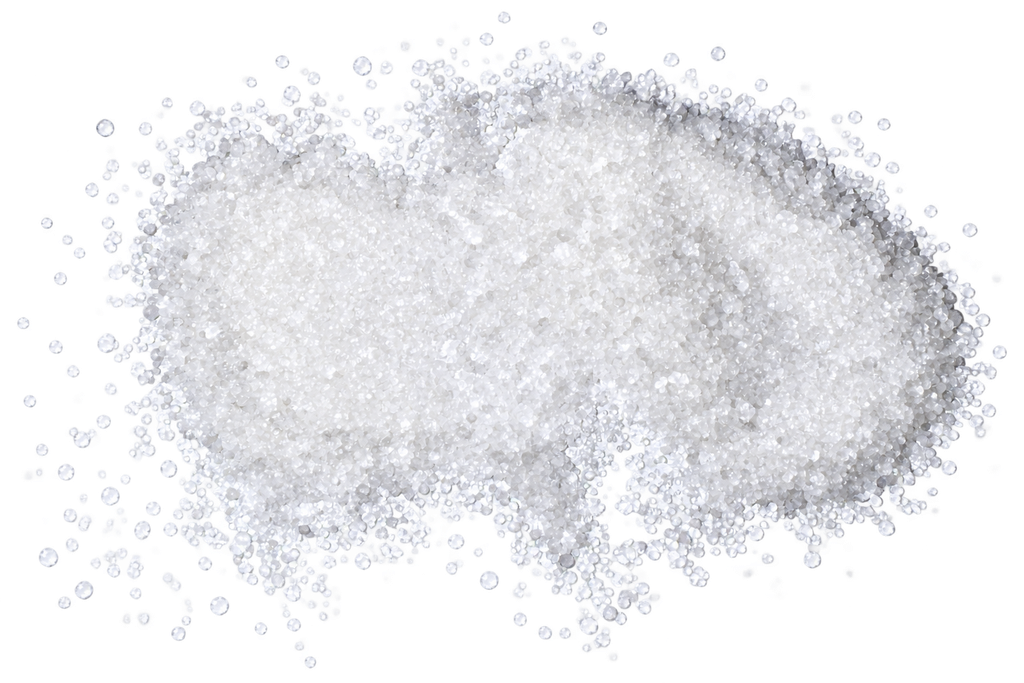
Non-Iodized Salt
Non-Iodized Salt is a versatile mineral ingredient used in skincare products for physical exfoliation, viscosity adjustment, and bath formulations. It helps improve skin smoothness through exfoliation and supports the texture of compatible cosmetic formulations.
A chelating agent that binds metal ions in the formula, improving stability, product quality, and performance over time.
Non-Iodized Salt (Sodium Chloride) is a naturally occurring mineral widely used in skincare and personal care formulations. Unlike iodized table salt, non-iodized salt does not contain intentionally added iodine compounds.
In cosmetic formulations, Sodium Chloride serves multiple functions, including viscosity adjustment, physical exfoliation, and formulation support. It is commonly incorporated into body scrubs, bath salts, cleansing products, and selected skincare formulations.
Its crystalline structure makes it suitable for exfoliating products, helping remove surface dead skin cells and leaving the skin feeling smoother. When dissolved in water-based formulations, it can act as a viscosity modifier in compatible surfactant systems.
The effectiveness and suitability of Non-Iodized Salt depend on its purity, particle size, concentration, and the overall formulation.
Benefits:
Physical Exfoliation: Helps remove dead skin cells from the skin's surface.
Smoother Skin Texture: Promotes a softer, smoother skin feel after exfoliation.
Viscosity Adjustment: Helps thicken certain surfactant-based cleansing formulations.
Formulation Support: Adjusts electrolyte concentration in compatible water-based systems.
Bath Care: Suitable for bath salts and mineral-inspired body care products.
Versatile Ingredient: Can be used in both solid and liquid cosmetic formulations.
Simple Composition: Provides a mineral-based option for cosmetic product development.
Usage:
Non-Iodized Salt may be added directly to anhydrous body scrub formulations or dissolved in the water phase of compatible cosmetic products.
For exfoliating products, select an appropriate cosmetic-grade particle size to minimize skin abrasion. Fine particles are generally preferable for gentler body exfoliation, while coarser crystals may be suitable for selected body and foot care products.
In liquid cleansing formulations, Sodium Chloride should be incorporated gradually while monitoring viscosity, as excessive quantities may reduce viscosity or destabilize the system.
Avoid applying concentrated salt products to damaged, irritated, or freshly shaved skin.
Recommended Usage in Skincare Products:
Application | Suggested Usage Level |
|---|---|
Body Scrubs | 20–70% |
Foot Scrubs | 20–60% |
Bath Salts | 50–100% |
Shower Gels / Body Wash | 0.2–3.0% |
Liquid Cleansers | 0.1–2.0% |
Facial Skincare Formulations | 0.1–1.0%, where compatible |
Solubility:
Water: Soluble, approximately 36 g per 100 g of water at 25°C.
Oils: Insoluble.
Ethanol: Very slightly soluble.
Recommended Phase: Water phase for dissolved applications, or solid phase in anhydrous scrubs.
pH: An aqueous solution of pure Sodium Chloride is approximately neutral, although final pH depends on water quality and other formulation ingredients.
Applications:
Body Scrubs and Exfoliating Products
Foot Scrubs and Foot Care Products
Bath Salts and Bath Soaks
Shower Gels and Body Washes
Liquid Hand Soaps
Facial Cleansers (at suitable concentrations)
Spa and Body Care Treatments
Mineral-Based Skincare Products
Cosmetic Formulations Requiring Viscosity Adjustment
Storage:
Store in a cool, dry, and well-ventilated area, away from moisture and humidity. Keep containers tightly closed to prevent moisture absorption, clumping, and contamination.
Protect from direct exposure to water and store away from incompatible materials. Use clean, dry handling equipment and retain the material in its original packaging or a suitable sealed container.